Words from a Reader

The “Writing Life Stories” e-mails I receive are such treasures. As soon as I see there is one in my inbox, I read it immediately. I look forward to them and never know how they will touch me. They can be interesting, informative, humorous, and/or touching.
Showing posts with label Coy Ray Council. Show all posts

Wednesday, September 7, 2022

My brother Ray's Story continued

One of my favorite pictures of Ray

After a stellar high school career and serving in the United States Navy during WWII, Ray came home in 1945. He found work, as he did in high school, in a couple of companies in Albany, GA and he contributed most of his income to the family. 

While in the military he endured a surgery in which he was given a spinal block as anesthesia. Because of that, he suffered severe constant pain and the military doctors said he should have back surgery at Emory Hospital in Atlanta. The government paid for the operation.
 
I remember Mother's extreme worry and concern for her son. She had children at home two hundred miles from Atlanta and could not be there with him. I was with her when she made a trip to visit him. I was under ten years old, I think, and was devastated when I saw my beloved brother who had to lie on his stomach day and night after the back surgery. It hurt my mother so much to leave him.  I felt her pain even though I didn't understand at the time what was really happening. I know she wanted to stay by his side and be sure he had everything he needed. I think knowing the pain he suffered throughout his life made him even more dear to her. My brothers claimed that Ray was her favorite. I don't doubt it. 

I don't know how many days he had to lie there face down, unable to sit up, to read, to eat normally, but Mother said it was a long time. The awful thing about this ordeal was that his pain did not improve after the surgery. In fact, he lived with chronic pain for the rest of his life. I will never know how he accomplished so much while fighting the pain that he endured without medications. He refused to take anything that would interfere with his thinking and his ability to function well.

I was not privy to the conversations that were held after he came home, but I think that was when Ray had to make some big decisions and his father had to accept that Ray would not be working on the farm anymore. With his disability, he could not physically do farm work like his brothers. 

Still wanting to contribute financially to the family, Ray attended Abraham Baldwin Agricultural College in Tifton Georgia and studied the latest farming methods. Because he was a veteran, his education was paid for under the GI Bill of Rights. He learned the newer methods of farming and, although Ray could see ways to improve the family farm, my father was a stubborn man and refused to make any changes in his own methods which he had learned from his brother Charlie and other older men.

My daddy finally agreed to let Ray use some acreage to try out the knowledge he had gained in school. 

He said, "Ray, if your land produces more than mine, I will agree to plant the rest of the farm your way next year."

My brother Max said that Ray's crops out-produced Daddy's fields. From then on Ray's advice was heeded.

Ray became a teacher and for two years he taught agricultural studies at Albany High School. In the summertime, he attended the University of Georgia in Athens where he majored in mathematics. 

in 1954, after he had earned his bachelor's degree, Ray and I both started school at the brand-new Albany High on Residence Avenue. He drove his little Karman Ghia automobile and Mother often insisted he give me a ride, so I didn't have to catch the bus. Having my brother on the faculty made me feel different from other kids. I kept a low profile, telling no one he was my brother, but everyone seemed to know.

My algebra teacher was one of his friends and I detested the woman. She was snarky and seemed to enjoy humiliating shy kids like me by sending us to the board to work on a problem in front of the class. The minute she called my name my mind quit working. I stood at the front of the class with all those eyes on me and anxiety overtook me. I never completed a problem before she told me to sit down. I felt like such a failure.

I heard from other students how much they loved Ray Council as their math teacher. He amazed me with his knowledge of math. He could add a long column of three-digit numbers in his head while I was still trying to add one column on paper.  I often wondered how he would treat me if I were in his class. He certainly didn't have patience with me at home. When Mother asked him to help me with my homework, he did not try to suppress his irritation.

Maybe he was embarrassed to have a sister who was dumb in math. Perhaps his friend, miss math teacher, told him how pathetic I was when she called on me.

All of us siblings who followed Ray in high school had to live with the comparison to Ray by his teachers. Some of my brothers resented this because none of them were really great students. Max said he thought following Ray in school was good for him. But he was only two and one-half years younger than Ray and enjoyed having his big brother look out for him. 

He said, "When teachers found out Ray was my brother, I got lots of attention from them."

In the 1940s, before I was born, my family lived in Lakeside, a residential area in west Albany near Lake Worth. The three older brothers walked to school together. At times groups of boys would try to pick fights with them. I assume boys have a pecking order and some resented Ray's achievements. 

Max said, "Ray was the oldest and our leader, but he was not physically a big boy. So, we would agree to fight one in their group, but we would have Hal do our fighting. He was bigger and a better fighter than Ray or me."

Ray's innate intelligence and practical ideas as well as his college education gained the respect of his family and led to his running the family business even though my father was still living. 

While still in his twenties, Ray applied for a loan to purchase the farm next to our place when Mr. Womble could no longer make his payments. Another neighbor applied to take over the loan but did not qualify. Young Ray did and the second piece of land on Fleming Road was added to the Council name. The three-bedroom one bath farmhouse Mr. Womble had built eventually housed two of my brothers and their new wives. While brothers who had always lived together did not mind that arrangement, the two women did not care for it.

Sometime in the 1950s, Max suggested they change to dairy farming as the crop farming was not earning enough for them to live on. My father held out for a while, refusing to change, but eventually gave in and got up at 4:30 AM to do his part.

When the boys who had worked and helped to build the farm began to marry, it was obvious that C.L. Council and Sons had to expand. They formed a unique business type in which all income earned was deposited into one account and each brother and my father drew the same amount in salary each month.

I was in high school when three of my brothers married. I was a bridesmaid in Rex and Mary's wedding in Sylvester, GA. Hal left the family business for a time striking out on his own, and Rex found part time work off the farm. Max stayed on and ran the dairy with Rex and Daddy. Farming was in his blood just as it was in my father's.

While teaching high school math, Ray met and married a teacher, a sweet girl named Betty. We all liked her, and they were very happy together for a number of years until she finally said enough to his business arrangement with his family. And who could blame her? They remained friends right up to the end of his life.

Unlike his brothers, Ray never lived on the farm. Neither Betty nor his second wife liked that idea. But he loved that farm and managed it as long as he lived. 

As each brother married and began families of their own, Ray and Hal began new businesses including the Battery Mart in Albany and Amco Transmissions. While in high school and in college I worked for them after school and on Saturdays. Ray taught me how to balance a checkbook and post transactions in a ledger. Gay and I helped Hal in the office of the Battery Mart. 

When I married at the first Methodist Church in Albany, GA, my sweet brother, Ray walked me down the aisle. He was always a father figure in my life. When my mother became too ill to manage my parents' affairs in 1975, Ray and I worked together to care for them. He made sure they would always have financial security. 

This is the second part of Ray's story. If you want me to tell you more, let me know.


Saturday, July 23, 2022

You say you like my family stories. Here is one for you.


Recently I found myself talking to a friend about my brother, Coy Ray Council. He was the second to the oldest child in our family. My sister, June, firstborn, entered the world in Pelham, Georgia. Ray is the only one of us to be born in another state. June 29, 1926, Ray was born in 
Rubonia, an unincorporated community in Manatee County, Florida. 

My father, Coy Lee Council, had moved his little family from South Georgia to Florida to work on a farm for his older brother, Charlie Council, also in Manatee County. In the early 1920s, Florida experienced a real estate boom. Huge immigration took place with people pouring there from the north and other southern states. Prices were soaring. People were moving to Florida in droves. Life was good. Many members of my Council and Robison families moved there and raised families that still live there.
Rubonia was a community of working-class people, mostly black, who worked in the fruit packing industry and in the orchards and fields. 

My father and mother lived in that settlement in the northwest corner of the county in a rented house. Daddy had to take a second job working nights at the ice plant to make enough to pay the rent and feed his small family. My mother said she was afraid, alone at night because she could hear strangers walking right outside her window. 

Rubonia is in the upper left-hand corner of the county.


When Ray was born in June 1926, two major hurricanes in Florida had caused millions in property damage and hundreds of lost lives. The boom was busting. The Depression was looming.

Moving Back to Georgia

My mother, Lois, wanted to move back to Pelham Georgia where her family still lived in the house where she grew up on the grounds of the Textile Mill where Coy had worked most of his life.

Soon after Ray was born, Coy and Lois left Florida and moved their little family back to Pelham. Coy did not go back to the mill. Instead, he bought a filling station on Railroad street from his brother-in-law, Jimmy Tinsley. That is the story I heard, but I think he might have rented the store from a landlord after Jimmy and Aunt Judy gave it up. I can't imagine he had money to buy a store.

Ray was a toddler by that time and June remembered Daddy standing little Ray on the counter in the store and letting him sing for the customers. That first son was the apple of my father's eye. June said he never gave her that kind of attention and I am not surprised. 

My father had a plan. He wanted a family filled with boys who could work on the farm with him, the farm he would one day own.

Little did he know how important Ray would become to the entire family. It is likely that he was the person who saved the land, the company, C. L. Council and Sons, and became the pseudo head of the family when he was a teenage boy. 

In 1943, Ray was seventeen years old. He missed the last three months of high school because he had to stay home and do the spring plowing and planting. The family depended on it. Daddy was too sick to do that work. 

Ray was not a big strapping boy. He was about 5 ft 8 inches tall and was not built like his younger brothers. He told Max later in life that on those days when he had to plow all day long, he became exhausted and had to stop at the end of each long row, lie down on the ground, and rest. 

What is beyond me is that he did not quit. He never said to Mother or Daddy that it was too much and he couldn't go on.

He plowed mules and horses because there was no money at that time to purchase a tractor. The heat and humidity in south Georgia are unbearable even in the spring months. But that young man felt such responsibility for his family and he knew his father was depending on him to get the crops planted. They say what doesn't kill you makes you strong, and perhaps that is what happened to my brother. 

Max said, "Ray missed the last three months of school, but went in to take his final exams. He aced them all." Max, who wasn't a good student, was in awe of Ray who never took books home with him. Ray finished his homework before he left school and then passed his tests with top grades. 

His teachers knew Ray was a diligent student who was not afraid to take on challenges. When given an opportunity, Ray entered contests at school. He entered and won an essay contest. As the winner, he had to read the essay to a group of adults, probably from the club that sponsored the contest. 

Evidently, Mother and Daddy went to hear him read because an influential man came to my father afterward. "Where is Ray going to college?" he asked Daddy. My family had no money to send any of us to college. 
I don't know what my father said to the man, but the wealthy man told my father, "When he gets ready to go, let me know. I will pay his way. This boy deserves and should get a college education." 

I am impressed that Ray was elected class president and even though he missed so much of his senior year, Max said he was Valedictorian at his graduation. What I am most sorry about is there is no school annual the year of Ray's graduation. Because of the war, it was not published.

Ray, at age 18, joined the military during the last year of WWII. He joined rather than wait to be drafted because he was told he would have a chance to serve in the Navy instead of being a soldier in the Army. I will never forget the sight of and my feeling of fear when I saw my father and mother embracing, both crying on the morning Ray left.

I can imagine Mother's fears for her son. She adored him and leaned on him after Daddy was hurt in an accident on the farm. I remember how my father suffered from chills and fever and pain. I can still hear his moans as my mother piles quilts on him. I don't know if there was ever a diagnosis for his illness, but I do know that he was treated for kidney disease at one time. 

I was five years old when Ray served in the Navy. It seems to me he came home almost every weekend, hitch-hiking in the dark on long south Georgia roads. He told us the story of when a long black car stopped and picked him up one night. It was dark in the car. He threw his duffle bag in the back seat and climbed in. Suddenly he realized there was someone else there. A man sat on the other side of the back seat. In the front was a driver.

He knew the men in the car had seen him on the side of the road in his white navy uniform. But who was this man in the car with him now? In the dark, he heard a voice ask him, "Where are you stationed, young man?" Ray answered and the man in the dark continued asking him questions about himself, his family, and what he thought about the Navy.

Ray politely answered everything he was asked. The man told Ray how much he appreciated his sacrifice for his country.

Ray asked to get out when the car reached Acree, a little settlement about three miles from our house. He would walk home from there. Ray, having been taught good manners, and being respectful of his elders, felt he had impressed the man in the dark car and was happy to have the chance to talk to someone of such importance. 

Somehow in that dark car, Ray came to understand he was riding with and talking to Georgia Governor E. D Rivers, a Democrat who accomplished many improvements in the state government. 

In today's world, one might be scared to get into a big black car in the dark with someone you can't see. But during that war, a man in uniform was treated as a very special person. Military men had no problem catching rides home on weekends. Civilians wanted to help in any way they could. In school, we donated our pennies to help the war effort. 

Ray would get to the farm Friday night in his uniform that made him so handsome and change into his farm clothes the next day to work with his brothers. One of them would drive him, now in uniform, over to Acree late Sunday afternoon where he would step out beside Hwy 82, hold up his thumb, and the first or second car that passed would stop and pick him up.

I will stop my tale for now. If you want to know more about my brother, Ray, and what he overcame to be the awesome man I miss so much today, let me know. I will tell the rest of the story.
Let me hear what you think. 


Monday, June 7, 2021

June is a special month for me.


It is the beginning of summer where I live. Everything is green, flowers are blooming, and it seems to be a time when most people are smiling. Perhaps the warm weather and water sports bring out happiness in those who enjoy the sun.

Downhome on the farm, this time of year, we cleaned out the swimming pool and my brother Rex got the filter going and the chlorine in again after it had been shut down all winter. Much of our family's social life centered around that pool once the weather was warm. The water was always cold. 

Barry could spend hours there on weekends floating in his favorite pool chair. When he was a teenager, he worked as a lifeguard at the Rockmart, Georgia swimming pool every summer. He loved the water.

I was not much of a water bug and was afraid of water most of my life. 
I blame my brothers who teased me and liked to scare me when I was a little kid. They took me out in a boat on one of the farm ponds and when they rowed up to the bank to get out, instead of lifting me out, they left me in the boat and pushed it back into the pond. Of course, I was afraid they were going to leave me so I did what any kid would do -- I jumped out of the boat trying to reach land. I immediately sank like a rock in the deep murky water.

I am sure my brothers didn't expect that to happen. One of them jumped in and rescued me quickly, but that fear stayed with me most of my life. I never learned to swim very well. However, I learned to water ski with my brother, Rex, driving the boat. I wore a life jacket so was not scared of drowning.
We spent many hours at Lake Blackshear in south Georgia as guests of the Booth family. I have some great memories of those days. 

The month of June is special to me because my sister, June, was born on the 25th, in Pelham, Georgia and my brother, Ray, was born in Rubonia, Florida on June 27th two years later. Not a day passes that I don't think of them and how much I miss them. 
June and Ray, my sister and brother at the family Christmas Party 

This month is also special to me because Barry and I married on June 14. I tell my students to list the turning points in their lives. That day was a huge turning point in my life.  

Today in my world here in the mountains of western North Carolina, I cherish my memories as I work in my deck garden.
I enjoy all the plants in their pots, blooming and growing while I celebrate summer with little Lexie helping me keep the pesky squirrel from digging and uprooting my hosta. 

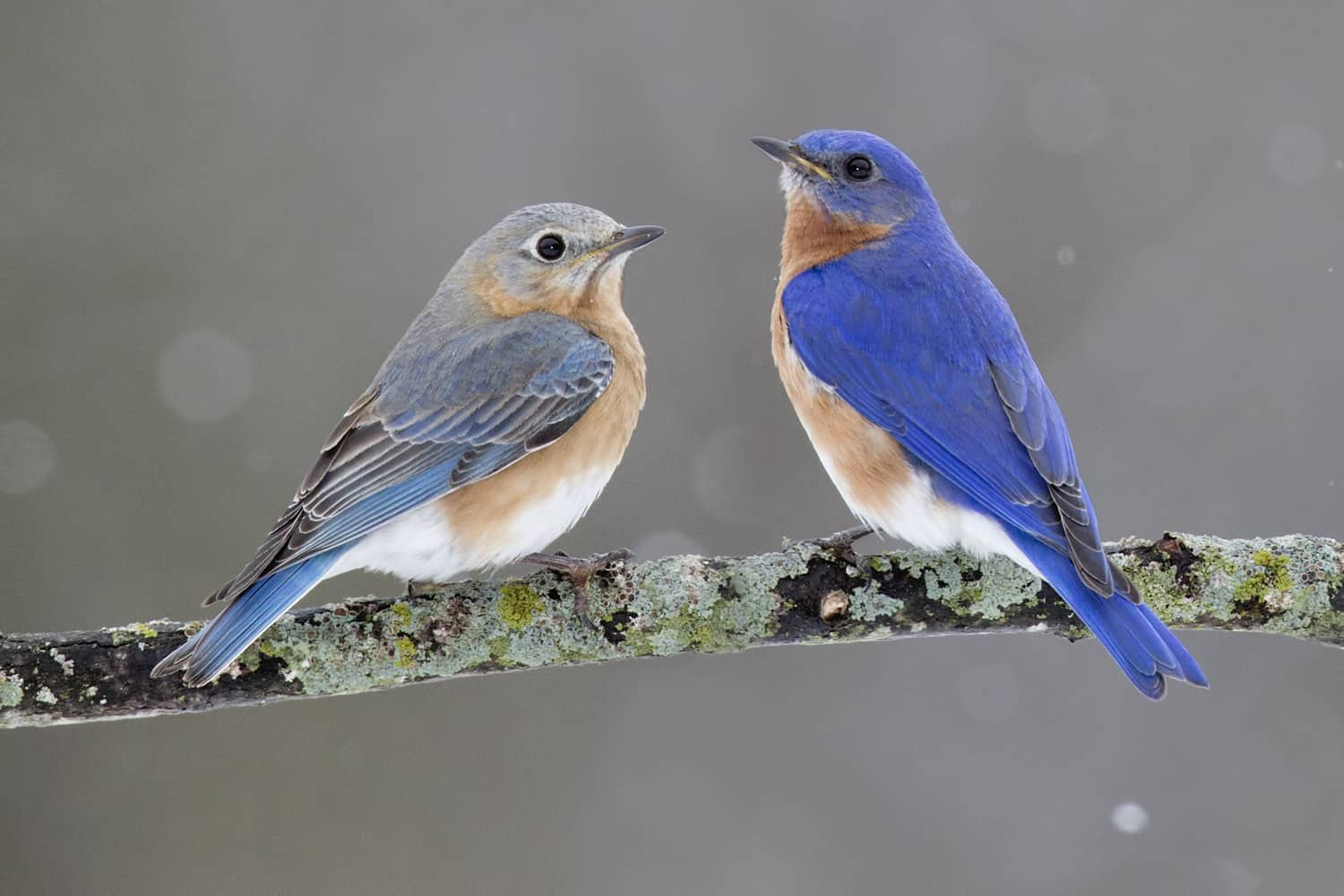
A pair of Eastern Bluebirds came to my door

A pair of Eastern bluebirds spent one day fluttering at my door and windows. They wanted to come inside. I have a bluebird box in the yard but think I need to clean it out from the last hatching. Maybe I should get another birdhouse for the pair that seems desperate for a place to nest right now. So many birds live around my home and I enjoy watching them.

With all the bad weather in parts of the US, I know many people are suffering from floods and tornadoes. I am afraid that climate change is wreaking havoc in places that used to be fairly safe. Stay safe and well until we meet again. 


Sunday, June 16, 2019

FATHER'S DAY remembered

Today is Father's Day. Mine has been gone since 1988, but his legacy lives on in his grandchildren and his great grandchildren.


Coy Council in 1920s. Photo clipped from a group picture of his baseball team. He loved playing baseball and, years later, watching it on television.


My father and mother holding baby son, Ray Council, their second child, in 1926.

I am re-blogging a post from years ago. Click on this link to read more.

https://profilesandpedigrees.blogspot.com/2009/06/fathers-day.html


Saturday, April 11, 2015

A Poem for My Brother

I was thinking  of my oldest brother, Ray Council, today. He died several years ago from complications of multiple myeloma, a  cancer that forms in the plasma cells. He fought it for three years. I'll never forget the day he and his wife, Gail, came to my house and told me they had some bad news. I couldn't believe it. He was the rock in our family. His bravery touched me. He never showed one bit of self pity. 

He was diagnosed too soon after his retirement. He and Gail had made plans to travel and enjoy life. I wanted him to have time and freedom to play, have fun, since he had always worked hard even as a young boy. He chose not to take chemotherapy that would ruin his quality of life. He had planned to go to China, and they did before he was too sick to make the trip. 


I moved to North Carolina, and he came up every summer for the festival on the square. We had wonderful visits with other family members who joined us. He became a big fan of a local group, Butternut Creek and Friends, and wanted to see them perform when he came up from south Georgia.

The times I cherish most are those trips he made, alone, to see me. We spent hours talking, sharing and planning my role in our family business when he was no longer here. Although I had worked with him in many capacities through the years, I'd not known how much trust he had in my abilities. 

I wrote a poem during the last days of  his life. I want to share it with my readers.

Early Morning Hope
                    for Ray

Fog like a band of cotton
obliterates the lake.
Gunmetal faces of mountains
float against a pale sky.
Naked arms of December trees
fade into the ashen scene.

Winter's late this year.
In the front yard, a red oak
clings tenaciously to leaves
that should have fallen long ago.

You still hang on, hairless,
face puffed from steroids
arms and legs, bones barely covered.
You question, wanting good news,
knowing you can only borrow time.

The clouds lift. We see more clearly
the silvery blue water on Lake Chatuge.
Truth hits us square in the eyes. 

Thursday, November 20, 2008

My Poem from an Old Photograph

Photo:
Coy Ray Council, born June 29, 1926, Manatee County, Florida
was the oldest son of Coy Lee Council and Lois Robison Council. He served in the United States Navy, earned his teaching degree and a masters degree from ABAC in Tifton, GA and the University of Georgia. He taught at Albany High School, Albany, Georgia.

He left teaching to go into business, and with his brothers eventually c0-owned and operated a manufacturing plant, Hercules Bumper Company in Pelham, GA where he served as CEO for over twenty years.

After a courageous three year battle with multiple myeloma, he died at the age of 74.

A Photograph of My Brothers and Me
by Glenda C. Beall

We stand in the front yard
before our white frame house
five of Mother’s seven kids.
I, dressed up in my white church dress,
leaning toward Ray, the older brother.

To my left is teasing brother, Hal
who swiped biscuits off my plate.
Standing like bookends are Max, the storyteller,
the songwriter. Rex, quiet like a wise old owl,
listening, thinking, seldom speaking.

Max told me stories, lying in the hammock
in the dark, under the giant Oak.
Rex taught me to water-ski, pulling me
past the stumps in Lake Blackshear.

Hal made sure I was not forgotten. He taught
me to dance – and did we dance, dance, dance.
Ray, Ray was there through good and bad, for all
of us, like a father, smart and solid as the stone
on his grave.


Published in the Journal of Kentucky Studies

Sunday, August 17, 2008

A Hidden Council Family Cemetery

Today I talked with my brother Rex. Within a few weeks the farm where I grew up, the farm my father bought in 1942 with a loan from the government, the farm where I played or rode my horse in every field or clump of woods, where I walked through early dew and smiled at morning glories swinging from a fence, that farm will no longer be mine in any way. It will belong to the sons of my brother Max Council. And so things change. But at least the farm will stay within the family -- at least for a generation we hope.
The Council Family Cemetery is located on that farm on Fleming Road in Albany, Georgia. Coy Lee Council and Lois Robison Council are buried together there. Stanley Hunter is buried there and my brother Coy Ray Council is buried there.
Few people even know this cemetery exists. You won't find it listed on graveyard.com or even on Ancestry.
Coy Lee Council, my father loved that land so much, he never wanted to leave it. He wanted to be buried there. He prepared himself years ahead to be in that place for eternity. On Sunday mornings he walked or drove his pickup over to the area where some years before a large swimming pool was built by our family. He sat there for a couple of hours on Sunday and communed with his God. Now, just past the swimming pool, on the other side of a fence, these four graves announce to visitors that they have entered a cemetery.
Depending on how well it is cared for in the coming years, my other brothers and my sister June will be buried there.